Last Updated on December 22, 2025
Accounting has always been the backbone of business, but the way we manage financial records has changed dramatically over the last few decades.
What began as ledgers on paper, then clunky desktop software locked to a single computer, has evolved into real-time, cloud-based platforms that businesses of every size now depend on.
Cloud accounting didn’t appear overnight.
It’s the result of technological progress, regulatory shifts, and the growing demand for speed, accuracy, and collaboration in finance.
From the early days of hosted services that struggled with bandwidth, to today’s powerful AI-driven tools that can categorize transactions automatically, each stage of development has reshaped how accountants and business owners work.
In this article, we’ll trace the full journey: how cloud accounting began, the milestones that pushed it forward, the challenges it overcame, and the innovations shaping its future.
By the end, you’ll understand not just where cloud accounting came from, but why it has become essential for modern businesses and where it’s heading next.
If you’re curious about the best options available today, stick around until the end.
We’ll point you towards the top 10 cloud accounting companies you can explore right now.
Jump To Section:
The Pre-Cloud Era: Traditional Accounting Software
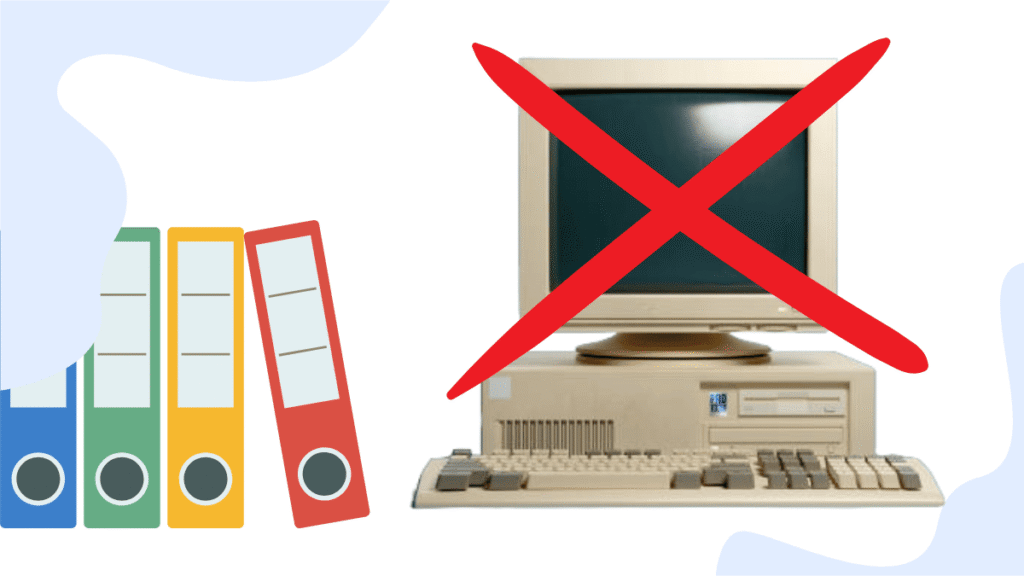
Before cloud technology, businesses relied heavily on desktop-based accounting, or traditional accounting.
Popular programs like QuickBooks Desktop or Peachtree (later Sage 50) dominated the 1980s and 1990s.
While they were revolutionary compared to paper ledgers, they came with several major limitations:
Single-device access
Software was installed on one computer, making collaboration nearly impossible.
However, businesses achieved more accuracy than paper.
Costly updates
Companies had to buy new versions or updates each year.
Updates came with improved features, but it was expensive and often disruptive.
Manual backups
Data had to be backed up on floppy disks, CDs, or local servers.
That way businesses maintained control of their data, but risked loss from theft, fire, or system failure.
Limited scalability
As businesses grew, the software often couldn’t keep up.
This approach was simple enough for small firms, but unfit for rapid expansion.
This era was marked by convenience over paper-based methods, but also frustration with rigidity.
Business owners and accountants began demanding a system that was more flexible, affordable, and collaborative.
That demand would eventually set the stage for the rise of cloud accounting.
The Early Days of Cloud Accounting
The late 1990s and early 2000s marked the first wave of cloud adoption in business software.
At this stage, cloud accounting was more of an experiment than a mainstream solution.
Birth of web-based applications
With the rise of the internet, forward-thinking developers began hosting applications on remote servers, allowing users to log in through a browser instead of installing software locally.
For accounting, this was a game-changer as it meant financial data could be accessed from anywhere.
Bandwidth and security hurdles
Early systems struggled with slow internet speeds and widespread skepticism about storing sensitive financial data “in the cloud.”
Many business owners felt more secure keeping files on a physical hard drive.
First pioneers
Companies like NetSuite (founded in 1998) paved the way by offering cloud-based ERP and accounting solutions.
These platforms showed that accounting software could move beyond desktop limitations, but adoption remained low because of cost, internet reliability, and trust issues.
Benefits despite limitations
Remote access: Early adopters could check finances outside the office.
Automatic updates: No need for yearly, costly installations.
Centralized data: All records stored in one secure location.
Although the market wasn’t ready to fully embrace cloud accounting, these early players proved that the model was viable.
Their bold steps created the foundation for the true breakout phase of cloud accounting in the mid-2000s.
The Breakthrough Moment (2006 to 2012)
The mid-2000s was when cloud accounting truly began to take off.
Internet speeds improved, online payment systems became more trusted, and small businesses were searching for affordable, user-friendly alternatives to clunky desktop tools.
Key Milestones
2006 – Xero launches in New Zealand
Xero positioned itself as a “beautiful accounting software” designed specifically for small businesses.
Its intuitive interface, real-time bank feeds, and collaboration tools showed what was possible when accounting fully embraced the cloud.
Benefit: Business owners could finally view cash flow in real-time without sending files back and forth with their accountants.
2001–2009 – QuickBooks goes online
Intuit, already dominant with QuickBooks Desktop, recognized the shift and began rolling out QuickBooks Online.
Although it started slowly, its huge user base gave it momentum once cloud adoption increased.
Benefit: Loyal QuickBooks users could transition gradually without abandoning a familiar ecosystem.
2005 – Zoho Books emerges as part of Zoho’s suite
Zoho Books brought affordability and integration with a growing set of productivity tools, appealing to startups and freelancers.
Benefit: Business owners could manage both operations and accounting in one ecosystem.
Why Businesses Began to Switch
Anywhere, anytime access: Cloud platforms could be opened on laptops, tablets, and eventually smartphones.
Collaboration: Multiple users could log in simultaneously, reducing delays and miscommunication.
Subscription pricing: Businesses could pay monthly instead of shelling out hundreds upfront for a desktop license.
Automatic updates & backups: Security, compliance, and features were managed behind the scenes.
This period transformed cloud accounting from a risky experiment into a credible solution.
By 2012, adoption was accelerating globally, and competitors rushed to enter the market.
Mainstream Adoption Era (2013 to 2019)
By the mid-2010s, cloud accounting shifted from being a niche innovation to the standard choice for small and medium-sized businesses worldwide.
Several factors converged to fuel this rapid adoption.
Driving Forces
Mobile-first mindset
Smartphones and tablets became everyday business tools.
Leading cloud platforms like QuickBooks Online and Xero launched mobile apps, letting business owners invoice clients, reconcile bank accounts, and track expenses on the go.
Benefit: Increased flexibility and productivity for busy entrepreneurs.
Global connectivity
Faster, more reliable internet allowed real-time collaboration not just between accountants and clients, but across entire teams, regardless of geography.
Benefit: Distributed teams could work seamlessly as if they were in the same office.
Third-party ecosystems
Companies like Xero and QuickBooks built app marketplaces with hundreds of integrations—covering payroll, CRM, project management, and more.
Benefit: Businesses could customize their accounting system to fit unique workflows without reinventing the wheel.
Competitive pricing
The subscription model became the norm, offering tiered plans for different business sizes.
Affordable entry-level packages meant even freelancers and startups could access professional-grade tools.
Benefit: Levelled the playing field as small businesses now had access to features once reserved for corporations.
Market Shifts
- QuickBooks Online became Intuit’s flagship product, overtaking its desktop version in popularity.
- Xero expanded globally, challenging Intuit in markets like the UK, Australia, and beyond.
- Zoho Books gained traction with startups and tech-savvy users seeking integration with Zoho’s suite.
- Wave Accounting (launched in 2009, acquired by H&R Block in 2019) stood out by offering a completely free plan, making professional accounting accessible to microbusinesses.
By the end of this era, cloud accounting wasn’t just an option.
Instead, it was becoming the default.
Traditional desktop software was steadily phased out, and expectations of accounting software were forever changed.
The Modern Era (2020 to Present)
The COVID-19 pandemic accelerated the global shift toward digital operations and cloud accounting was no exception.
Remote work highlighted the limitations of desktop-based systems and pushed even late adopters into the cloud.
Key Trends Defining Today’s Cloud Accounting
Remote-first operations
With teams working from home, businesses needed tools accessible from anywhere.
Cloud accounting platforms like QuickBooks Online, Xero, Zoho Books, and Wave became lifelines for keeping financial operations running smoothly.
Benefit: No interruptions in bookkeeping, invoicing, or payroll, even when offices shut down.
AI and automation
Modern systems now use AI for tasks like receipt scanning, expense categorization, and predictive cash flow analysis.
Benefit: Reduces manual data entry and frees up business owners to focus on growth.
Deeper integrations
Accounting platforms are no longer standalone, they integrate seamlessly with e-commerce (Shopify, WooCommerce), payment gateways (Stripe, PayPal), and CRM systems (HubSpot, Salesforce).
Benefit: Businesses get a unified view of their finances and operations, improving decision-making.
Advanced analytics & insights
Real-time dashboards provide KPIs like revenue, expenses, and profitability at a glance.
Benefit: Even non-accountants can understand their financial health instantly.
Global expansion
Cloud accounting platforms continue tailoring features for different regions, including multi-currency support and local tax compliance.
Benefit: Businesses can confidently scale across borders without switching systems.
The Industry Landscape
- QuickBooks Online remains the global leader, especially in North America.
- Xero dominates in markets like Australia, New Zealand, and the UK.
- Zoho Books appeals to tech-savvy SMBs with a cost-effective ecosystem.
- Wave continues to serve microbusinesses, often as a gateway into paid platforms.
In this era, cloud accounting has moved beyond simple bookkeeping.
It’s now a strategic business tool that empowers companies to scale, adapt, and compete in a digital-first economy.
The Future of Cloud Accounting
As cloud accounting continues to mature, the future looks even more transformative.
Emerging technologies are set to push the boundaries of what accounting software can do, turning it from a record-keeping system into a true financial intelligence hub.
Key Developments to Watch
Artificial Intelligence (AI) & Machine Learning
AI will move beyond automating tasks like expense tracking to providing predictive insights.
This includes forecasting cash flow, detecting anomalies, and even suggesting financial strategies.
Small businesses will gain CFO-level insights without hiring a full finance team.
Blockchain and Smart Contracts
Blockchain promises transparent, tamper-proof financial records.
Combined with smart contracts, it could automate invoicing, payments, and compliance.
This reduces fraud risk and faster, more secure transactions.
Embedded Accounting
Accounting functionality will increasingly be built directly into business platforms.
Examples include e-commerce, project management, or payroll apps.
Users won’t need to “switch systems” for financial tasks as accounting will happen in the background.
Greater Personalization
Systems will adapt to the unique workflows of each business.
Think AI-driven dashboards tailored to industries, or automation tuned to a company’s size and growth stage.
Businesses get a system that feels custom-built without the cost.
Global Compliance at Scale
As businesses operate across borders, cloud platforms will enhance compliance tools for local tax laws, VAT/GST, and multi-currency accounting.
Companies can expand internationally with confidence.
What This Means for Businesses
The future of cloud accounting isn’t just about keeping the books.
It’s about strategic advantage.
The platforms of tomorrow will help businesses predict problems before they arise, streamline every financial touchpoint and support growth in ways traditional systems never could.
Wrapping Up
The history of cloud accounting is a story of evolution and innovation.
We went from slow desktop software in the 1980s, to early cloud experiments in the 2000s, and now to today’s smart, AI-powered platforms.
Each stage has brought businesses closer to a world where financial management is not just about recording transactions, but about gaining insights, making smarter decisions, and unlocking growth.
Today, platforms like QuickBooks Online, Xero, Zoho Books, and Wave show how far the industry has come.
They offer user-friendly interfaces, automation, integrations, and real-time analytics that were once unthinkable.
With AI, blockchain, and embedded accounting on the horizon, the next chapter promises to be even more transformative.
If you’re considering moving to cloud accounting or upgrading your current system, now is the time.
To help you choose the best fit for your business, we’ve compiled a detailed guide to the top 10 cloud accounting companies.

- Best Accounting Software For Restaurants In 2026 - January 5, 2026
- Best Accounting Software For Retail Businesses In 2026 - January 4, 2026
- Best Accounting Software For Property Management - January 4, 2026